
The comic is a little unbecoming, isn't it? Unfortunately, a little too familiar in SaaS.
More often than not, you'll see orgs increase traffic for the sake of it. Non-related keywords, non-responsive content, the same old umbrella-technique research, blackhat backlinks. Like I said — all too familiar.
Founder: Our organic funnel is our main point of concern. Good thing is we have steadily growing 40–60K traffic. So this should be an easy project to take on.
Me: Awesome, let's optimise for business intent first?
Founder: No, start with our blog. It has the highest traffic. 60% of entire website.
Me: What would be our top pages there?
Founder: Well, "best beaches in India" is one.
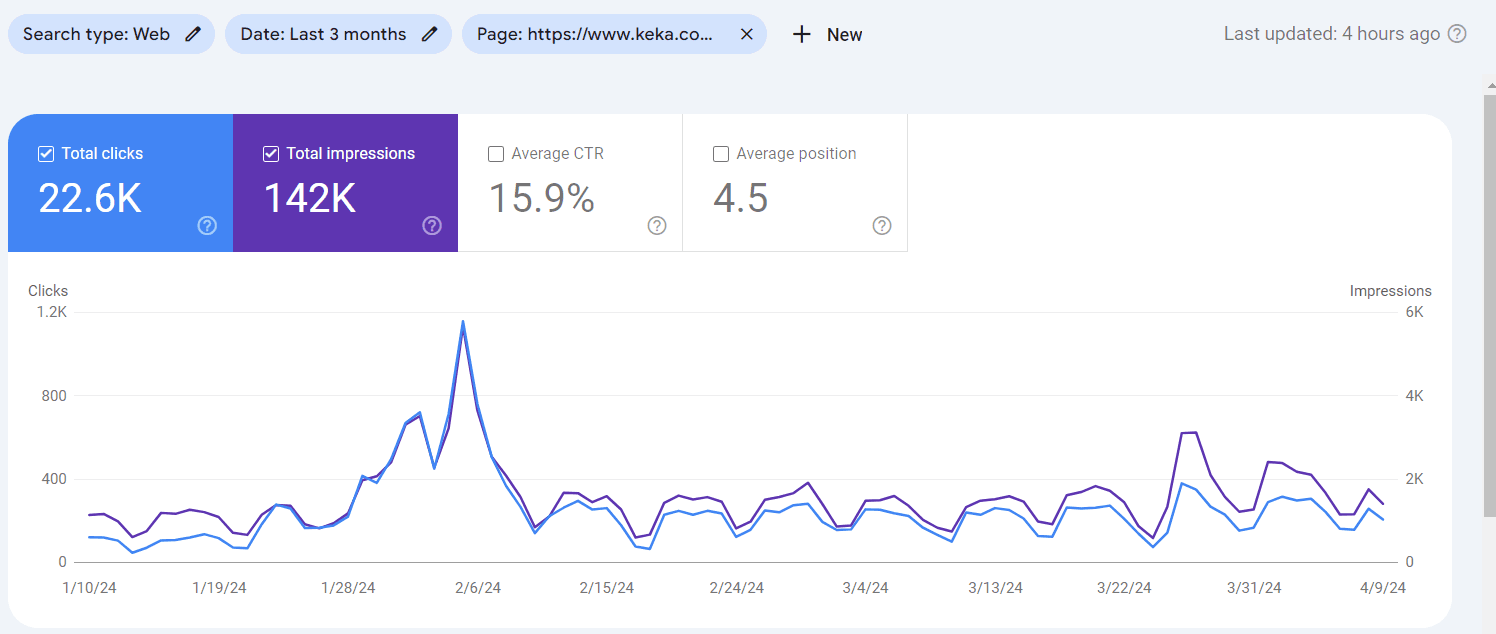
As you'd imagine, traffic took a dip as soon as the next GSC update rolled out.
The Irony of it All
I'll let you in on something. Playing the right way might just be the easiest trick of them all.
You want traffic? Focus on your niche. You have the expertise and first-hand results. Don't target unrelated keywords — Google hates that.
You want higher Domain Authority? Be a thought leader. Collaborate with your kind. Say something they can't help but quote back to.
You want Organic MQLs? Go with the intention of helping your ICP. Teach novel ideas, be a storyteller, emphasise your tool's mission — not just its features.
What Topical Authority Does Differently
As a marketer, I follow Koray Tugberk GUBUR's Topical Authority framework. In simple terms: it's crafting your website to be the go-to destination for everything related to a specific topic. Then you bring in crystal-clear central entity, responsive and representative queries, query semantics, sequence modelling, and more.
Achieving 10M+ Traffic with SEO Topical Authority
I have implemented this with 4+ organisations. Here is a snapshot of Keka's growth over a period of 1 year:
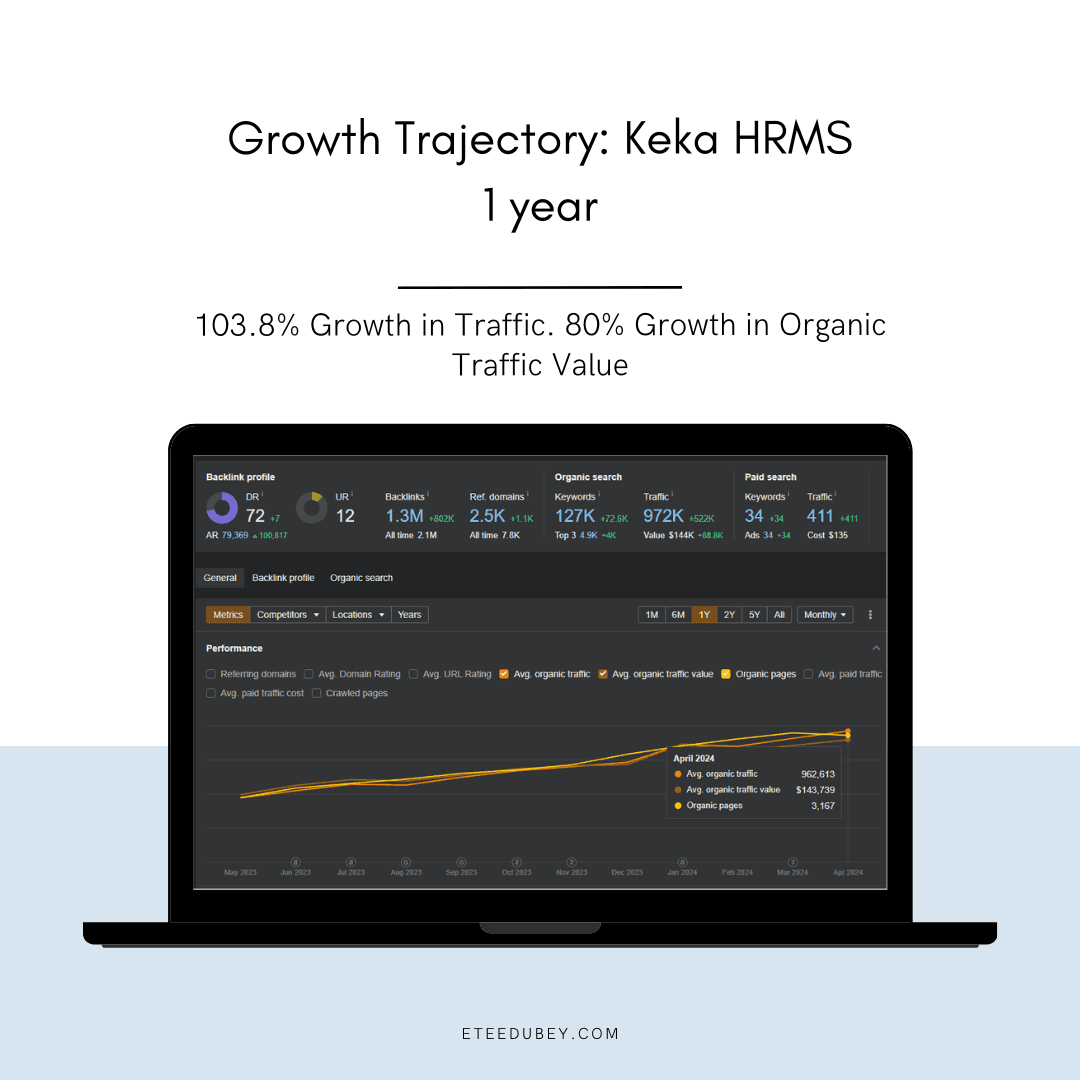
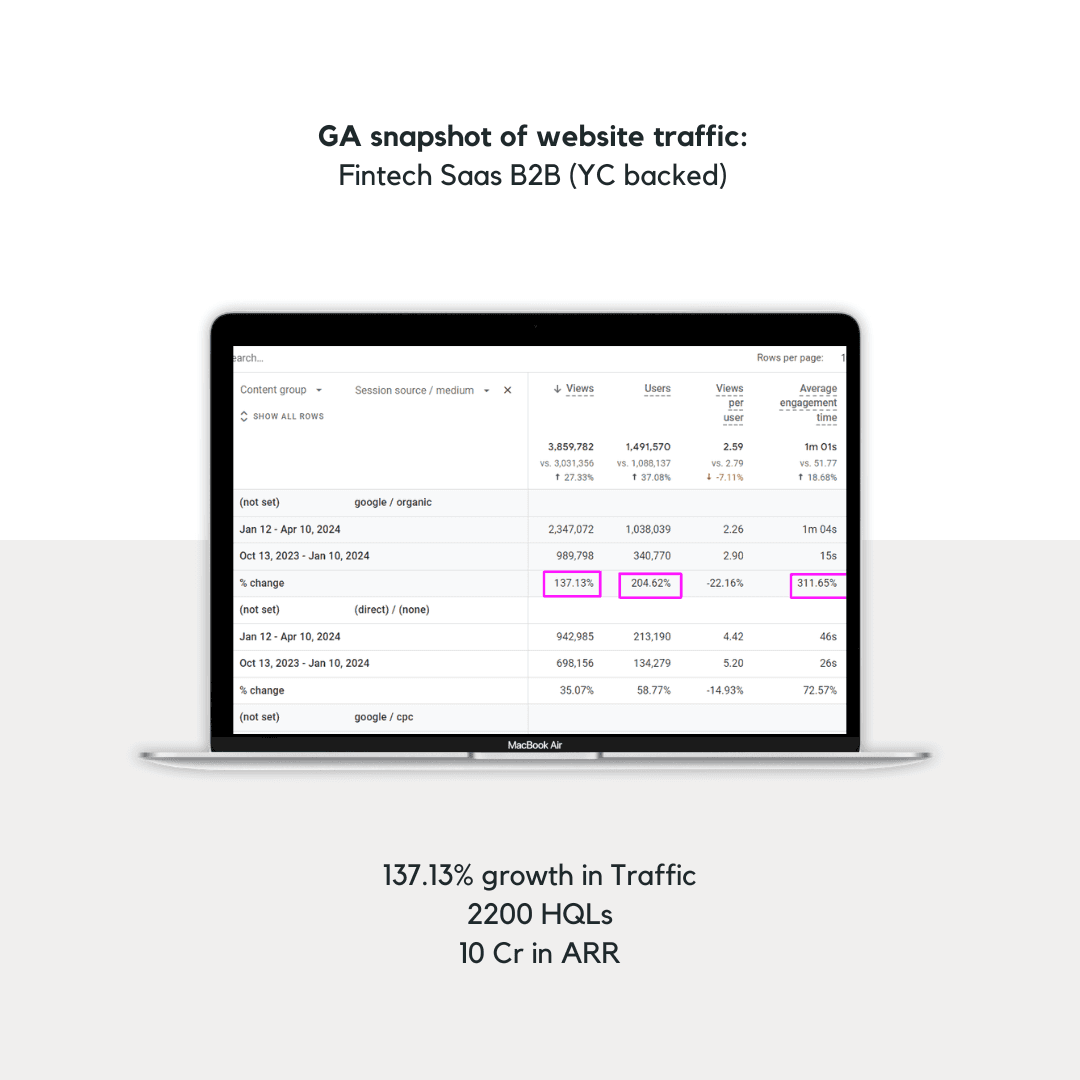
We almost doubled the value of organic traffic from $79,494 to $143,739. Below is the GA Organic growth dashboard for another B2B SaaS where we generated revenue of 70M from organic and direct traffic alone.
A Glimpse of My Proven Frameworks
First things first: great marketing cannot compensate for a bad product. If you're reading this, you must have your product USP, ICP, targeted audience, and brand narrative ready. In technical SEO terms — your Central Entity, Source Context, and Topical Map are ready. Then we head on to the first objective.
Objective 1: 35% Average QoQ Growth in Organic Search Traffic
- Ensure entire topical coverage.
- Thorough keyword research — go beyond competitor gap analysis. Talk to leaders, customers, sales. Experiment. Don't trust third-party tools blindly.
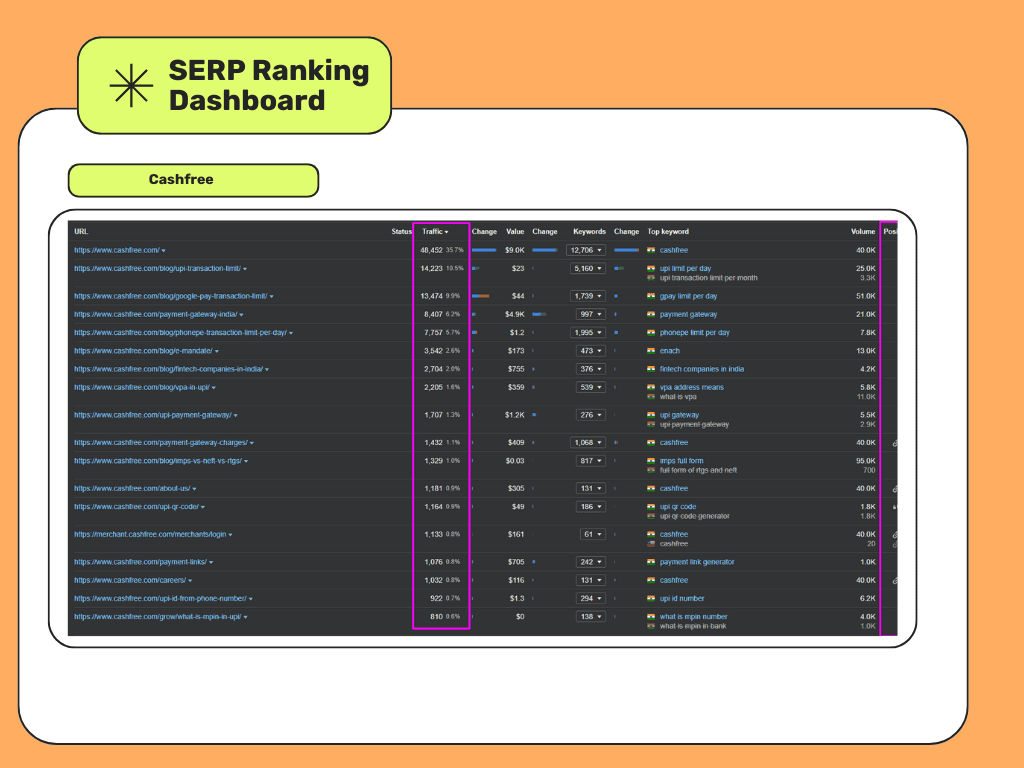
- Keep an eye on your SERP rankings — especially for high business-intent pages. Update and refresh content regularly.

Objective 2: Improve Keyword Rankings & Content Quality
The "staying in SERP Top 5" game is exhausting. But it's fun. Here's one common truth all adept SEO specialists accept: if you truly aim to help your target audience, you'll get rewarded.
- Do NOT limit yourself to Google for research — it's outdated. Go for boolean search (filetype:pdf), research papers, books, podcasts, Reddit threads, and Google Scholar.
- Create original frameworks, tools, and schools of thought.
- Understand query semantics — categorise content by intent (buy, learn, navigate).
- Use critical thinking. Structure and copywrite so it sticks. This is the only thing that separates you from AI.
- Consistency is key.
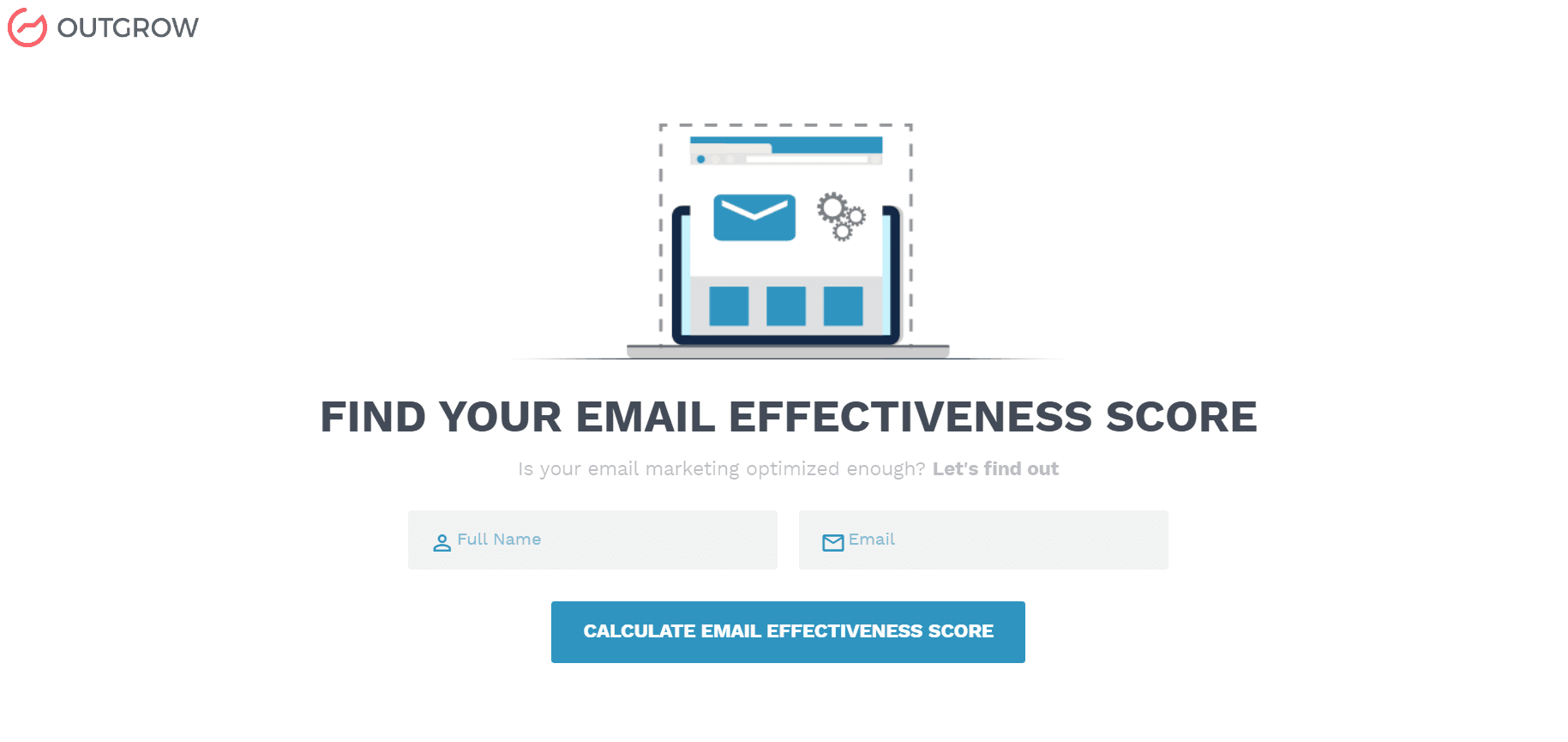
- Be innovative. Let your customers learn through interactivity.
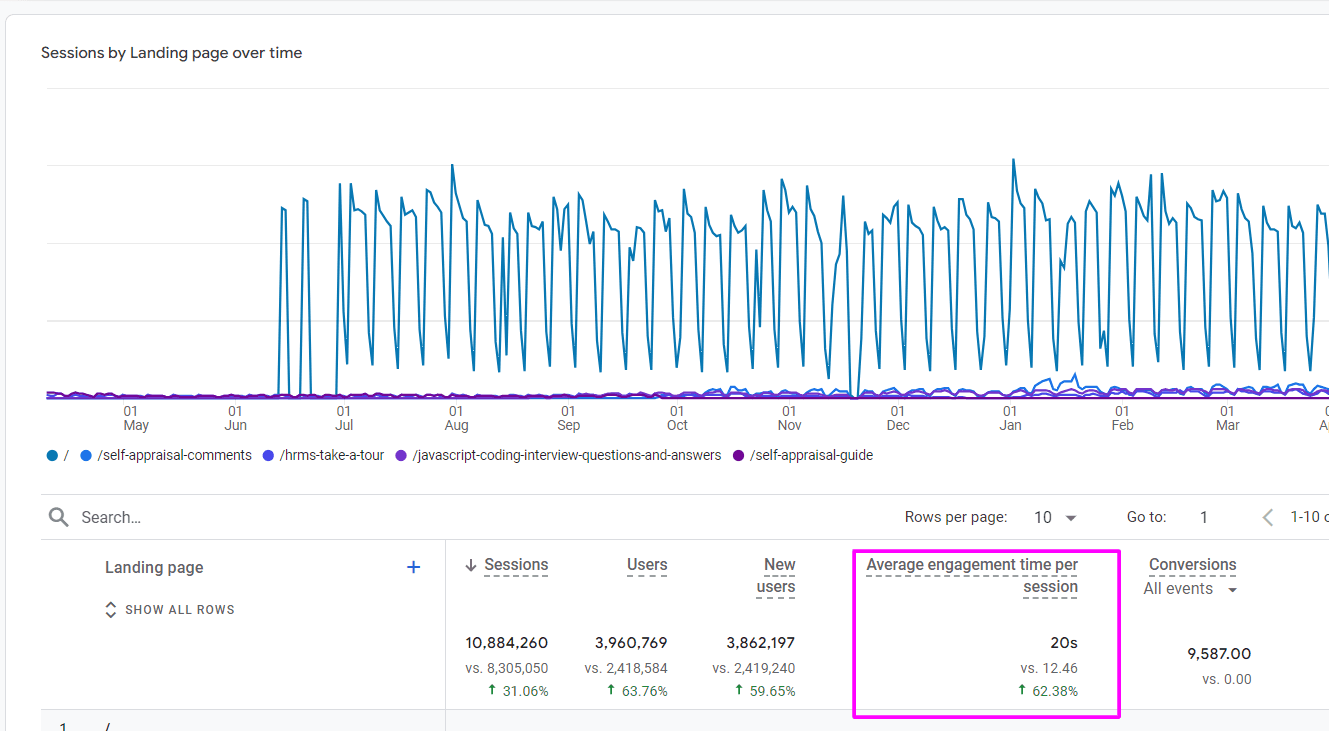
- Track average time spent on page. Inculcate storytelling.
Objective 3: Improve Backlink Authority from 20 to 52
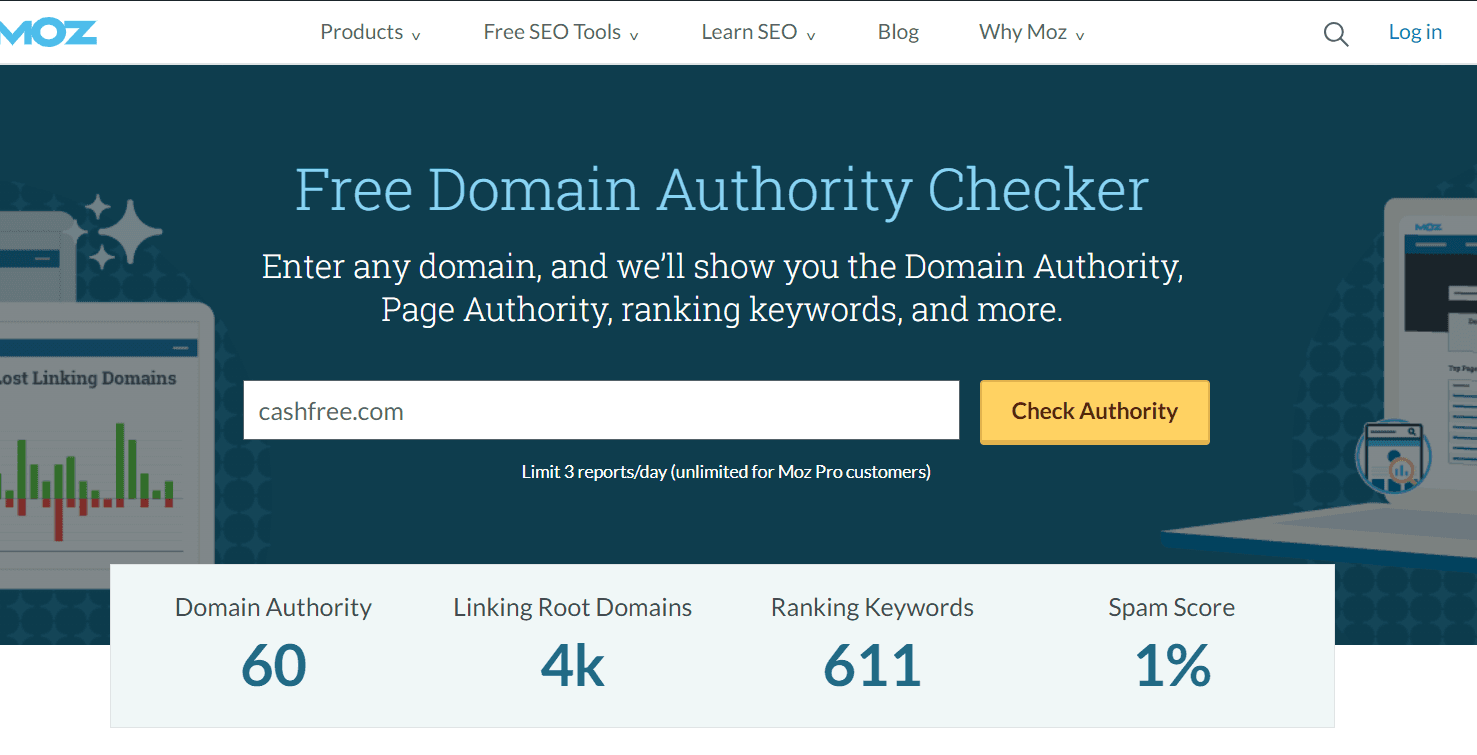
Domain authority is unlike keyword rankings. It is rigid, difficult to budge, and takes years to create. For you to get backlinks from trusted sources, you have to create trusted content.
- Create original reports — they tend to get the highest backlinks.
- Create frameworks and models your ICP will find helpful.
- Create free tools.
- Create shareable content assets: infographics, case studies, expert guides.
- Disavow toxic backlinks if necessary.
Objective 4: Increase Conversion Rates and Revenue
Arguably, the most important objective. Conversion rate is directly proportional to your readability. Tell a story. Talk about its impact on your customer — not you. Don't sell features, sell emotion.


- Optimise landing pages for conversion: messaging, design, and UX. A/B test elements and CTAs.
- Study heatmaps, scroll depth, and CTRs. Identify barriers to conversion.
- Build a data-driven attribution model. Understand first and last touchpoints.
Objective 5: Technical SEO Optimisation
The operational work you can't escape. In my professional opinion, 60% of these tasks will be phased out by AI by 2027. Nevertheless:
- Improve website loading speed. Conduct a technical audit to identify and fix broken links, duplicate content, and crawl errors.
- Increase mobile usability score. Compress images, minify CSS and JS, leverage browser caching.
- Ensure proper indexing and crawlability. Implement responsive design. Use Google PageSpeed Insights and Mobile-Friendly Test.
That brings us to a completion. Thanks for staying till the end. Have thoughts on my framework? Forward them to thoughtstoetee@gmail.com
Want me to implement this for your org?
Get in Touch